Maya had been in her role for eight months when she realized something was off.
On paper, everything was fine. She liked her work. Her manager was supportive. Her calendar was packed with meetings, and her Slack notifications rarely stopped. But when a project she’d spent weeks on finally launched, she realized she had no one to celebrate with. Not really. She closed her laptop that evening feeling strangely flat.
Maya had joined the company remotely, and her team was spread across three time zones. Every conversation had an agenda. Meetings started on the hour and ended on the hour. She knew her colleagues’ work well, but she didn’t really know them.
At first, she told herself it didn’t matter. She was there to do good work, not to make friends. But the feeling lingered. She noticed she was less excited to share ideas, and she’d started turning her camera off more often. Work had begun to feel like something she did alone, even though she was surrounded by people.
When she finally talked it through with a coach, the first thing she heard was that what she was feeling was common, especially for people who start remotely. The second thing was more surprising: connection at work is a skill, not a personality trait. It doesn’t just happen to outgoing people. It can be built, deliberately, one small step at a time.
So Maya started small.
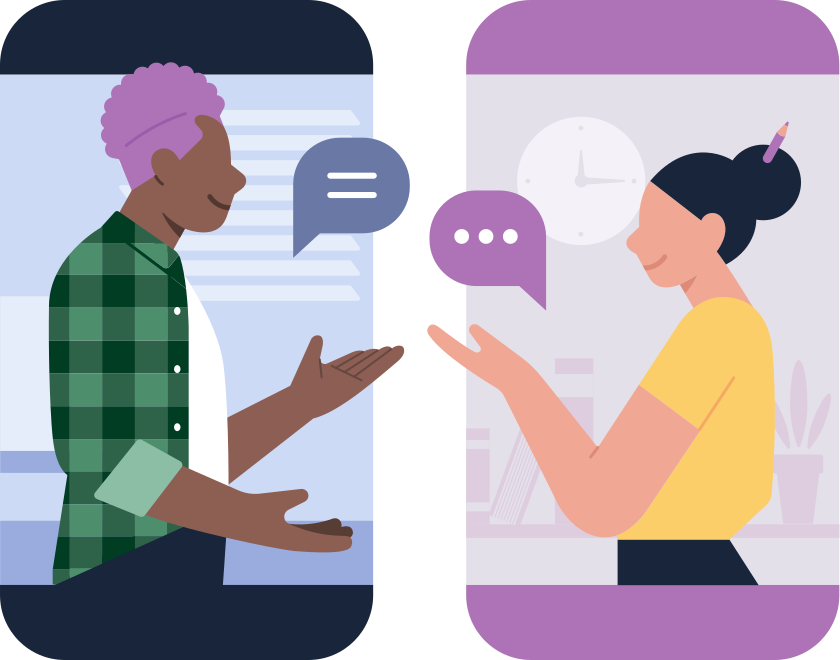
Her first step was the least comfortable. She messaged a colleague named Jordan, whose work she’d admired in a few cross-team meetings, and asked if he’d be up for a 15-minute virtual coffee with no agenda. She almost didn’t send it. Jordan replied within the hour: “Honestly, I’d love that. I’ve been meaning to do more of these.” They talked about their projects for a few minutes, then about a hiking trail they both loved, then about how strange it was to work closely with people you’d never met in person.
That one conversation made the next ones easier. Maya started opening her team meetings with a few minutes of real conversation, asking people how their week was going outside of work. She was surprised by how quickly others joined in. A teammate mentioned she’d been feeling disconnected too.
She also started noticing moments to recognize others. When a colleague on another team helped her untangle a data problem, she thanked him in the team channel instead of in a private message. He wrote back that it had made his day.
A few weeks later, Maya joined an employee resource group focused on outdoor activities. It gave her a way to meet people well beyond her team, around something she genuinely enjoyed.
Not every attempt turned into a friendship, and that was okay. Some coffee chats stayed pleasant but brief. What changed was the overall texture of her workday. Instead of a string of transactional meetings, she had a handful of people she genuinely looked forward to talking to. When her next project launched, she knew exactly who she’d message first.
Maya’s story isn’t unusual, and the steps she took aren’t complicated. If work has started to feel lonely for you, here are a few places to begin, drawn from what worked for her.
Reach out to one person whose work you admire and suggest a short, agenda-free chat. Bring a little more of yourself into routine conversations by asking how someone’s week is really going. Recognize a colleague’s help publicly. Look for a group or community built around something you care about. And give it time, since connection builds through consistency, not one big moment.
If loneliness is starting to weigh on your mood or wellbeing beyond work, please reach out to someone you trust, your company’s Employee Assistance Program, or a healthcare provider.
Feeling disconnected at work? A Bravely coach can help you figure out where to start and practice reaching out in a way that feels natural to you. Book a session here.